Reference
Recon planes
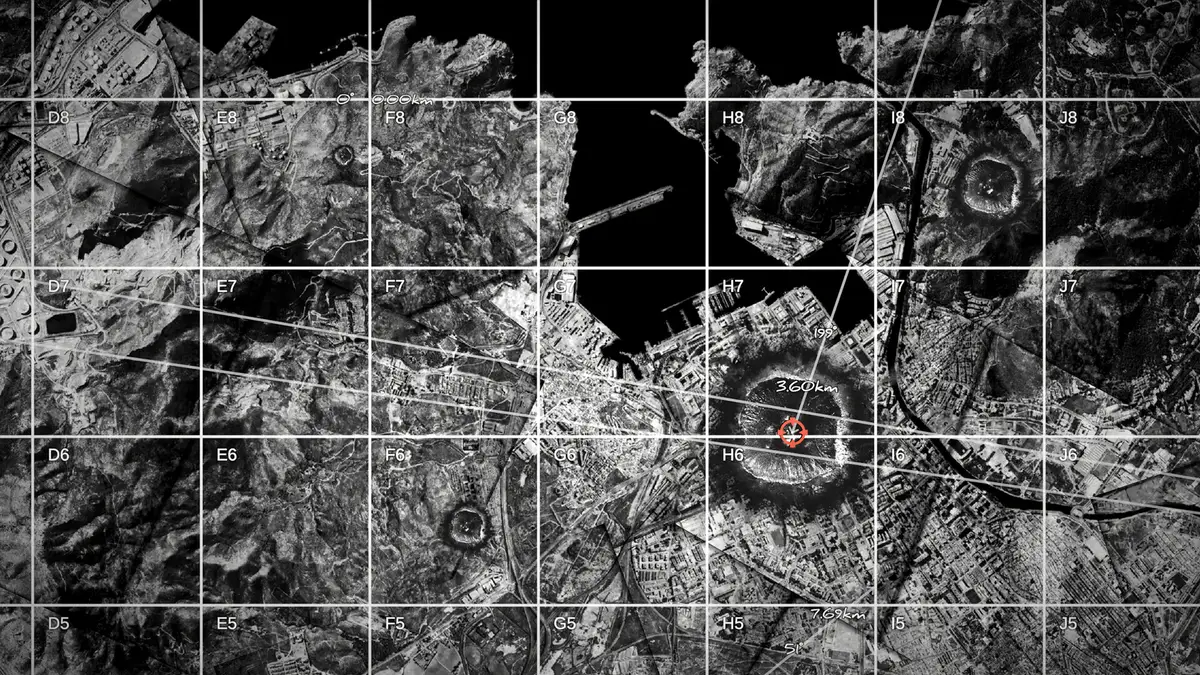
A reconnaissance flight is the only way to see ground no spotter is watching. It is also one of the most expensive things on the Requisition Console, and it photographs a line — not an area.
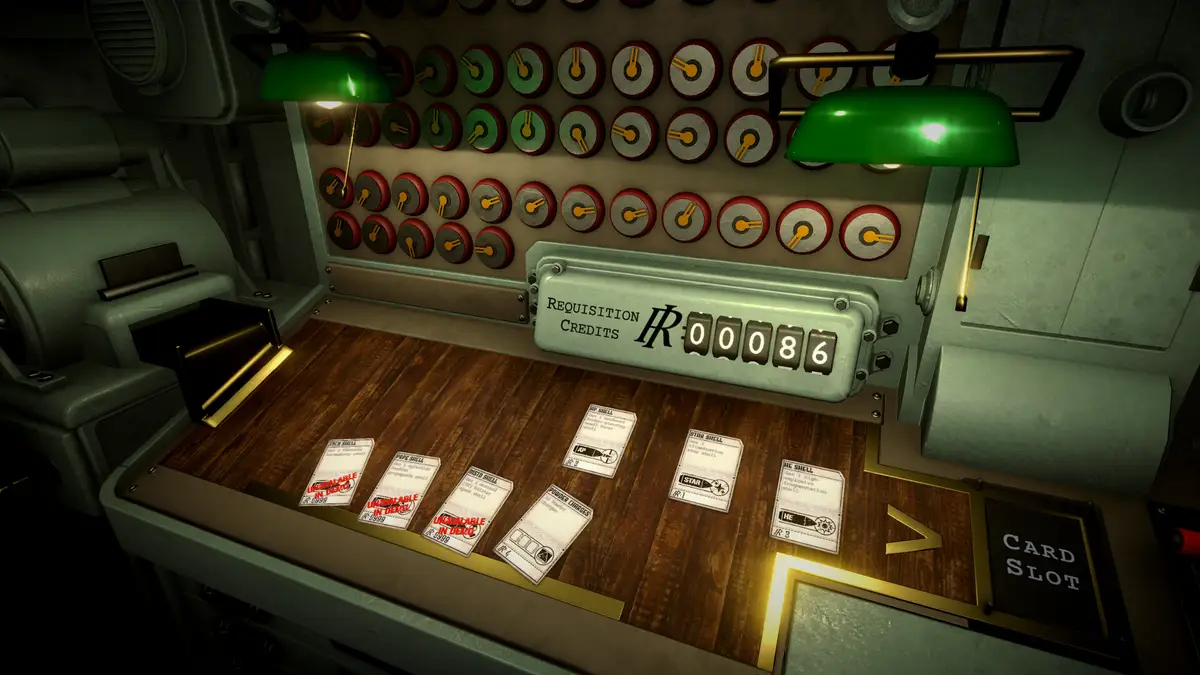
Ordering a flight
Reconnaissance is bought like everything else: put the card in the stamper on the Requisition Console, then fill in two numbers.
- A starting point. Grid coordinates for where the camera run begins. This is not a takeoff point and not a target — it is the first frame.
- A heading. The bearing the aircraft flies from that start point. It photographs a strip along that line.
Everything under the flight path gets revealed: terrain, and any targets sitting in the strip. Everything outside it stays dark, however narrowly you missed.
Route it through your uncertainty, not over your best guess
The common instinct is to fly directly over the single spot you suspect. That wastes most of the frame. A flight is a line, so lay that line along the long axis of the area you are unsure about — down a valley, along a treeline, across the arc where two range circles both plausibly put the target. One well-chosen heading can eliminate four candidate positions at once.
Photos go stale
This is the single most expensive misunderstanding in the game. A photograph records what was there when the shutter opened. It is not a live feed and it does not update.
When a mission spawns reinforcements — artillery rolling out of camouflage, a second battery arriving — those units do not appear on photographs taken before they existed. Ground you have already photographed and cleared can become the most dangerous square on the map, and your map will keep showing it as empty. If a mission has waves, budget for re-photographing ground you have already covered. This is exactly what catches people out in Counter-Battery.
The cost, and when it is worth it
Recon flights are priced high on purpose. Requisition spent on a flight is requisition not spent on powder charges, shells and other abilities, and the developers have been explicit that this trade is the point. You are meant to feel it.
Reach for a flight when:
- You have no observation at all. No spotter reports means nothing to triangulate from, and guessing costs more than the flight.
- Your candidates are spread along a line. A flight resolves several at once; firing a probe round resolves one.
- A wave has just arrived. Your existing photos are now known to be wrong.
Do not buy one when:
- Two spotter reports would do the same job.Triangulation is free.
- You have one candidate square. A single non-destructive TEAR round confirms or clears it for a fraction of the cost.
- You are low and the mission still has targets. Running out of charges with targets on the board is worse than not knowing where one of them is.
Where recon fits in the loop
no observation → recon flight → plotted candidates → probe round → confirmed target → fire mission
Each step is cheaper than the one before it in requisition and more expensive in time. Skipping from "no observation" straight to "fire mission" is how a run ends with an empty console and a live enemy battery.
Next
Sources
- Steam thread — How do recon planes work (and other mechanics)? — Recon plane routing and requisition cost.
- Community guide — An operator's guide to the basics — Player-written reference for the grid system, marking tools and charge/elevation maths.
- General Discussions, Steam Community — Player reports on mission behaviour, including the counter-battery respawn rules.
Last updated .